
Buying property in Spain or Italy in 2026: a complete comparison of prices, taxes and legislation
Spain and Italy have long been among the most popular destinations for Slovak and Czech clients considering buying property abroad . Both countries offer a Mediterranean climate, good air accessibility from Bratislava and Prague, and established communities of foreign owners.
However, 2026 brought changes in both countries — in prices, taxes and legislation — that significantly affect the decision between Spain and Italy. In this article, we have prepared for you an up-to-date comparison based on data from 2026, including information that has not yet been addressed in previous guides: the abolition of golden visas in Spain, the proposed tax for non-EU buyers and a new tax benefit for foreigners in Italy, or the tourist license for short-term rentals in Spain.
Summary in a nutshell:
- Prices: Italy is on average cheaper (~€2,188/m²) than Spain (~€2,709/m², growth +14,4% per year).
- Taxes on purchase: Spain 8-13% of the price, Italy 7-14% of the price.
- Mortgage for foreigners: in both countries max. 60-70% of the property value.
- Legislation: Spain has abolished golden visas (2025) and is considering a (yet unapproved) tax for non-EU buyers — Slovaks and Czechs are not affected. Italy, on the other hand, offers a 7% flat tax for foreign pensioners.
- Recommendation: Spain for beach accessibility and liquidity, Italy for lower initial capital and long-term relocation.
Property type: resort apartment or townhouse?
Before we look at the numbers, it is important to note that Spain and Italy offer buyers a different type of product.
🇪🇸 Spain
The market is mainly built on modern resort apartments and villas in gated complexes with communal swimming pools and gardens, concentrated along the coast (Costa Blanca, Costa del Sol) and on the islands. The property is typically immediately habitable, often with furnishings.
🇮🇹 Italy
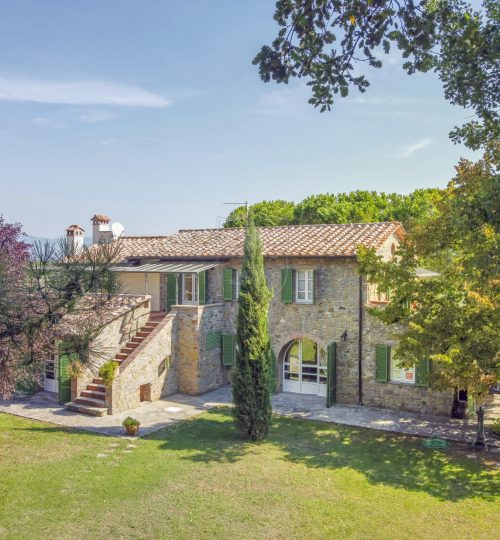
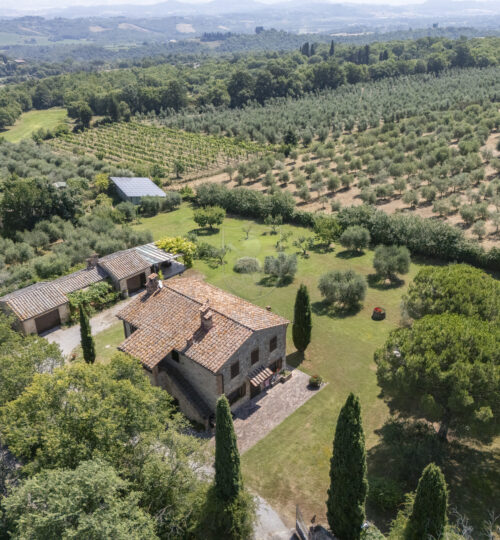
Detached houses, townhouses and apartments in historic centres predominate , including older properties in need of renovation. The market is more fragmented between regions (Tuscany, Puglia, Sicily, Sardinia), which brings more choice but also greater differences in the quality and condition of properties.
Real estate prices in 2026
According to current real estate market indices, the average property price in Spain reached €2,709/m² (April 2026), up 14,4% year-on-year. In Italy , the national average is lower — €2,188/m² , with a more moderate annual growth of around 4,2%.
| Indicator | Spain | Italy |
|---|---|---|
| Average price per m² (nationwide) | ~€2 | ~€2 |
| Year-on-year price growth | ~ 14,4% | ~ 4,2% |
| The most expensive location | Madrid – Salamanca (~10,000 €/m²) | Milan (~€5,650/m²) |
| Strongest regional growth | Balearic Islands and Canary Islands (+21,6% y/y) | Northeast Italy (+4,7% y/y) |
🇪🇸 Examples of prices in Spain
- Costa Blanca: 2-bedroom apartment €90,000 – €150,000
- Costa Blanca: villa €180,000 - €280,000
- Costa del Sol: apartment €300,000 - €600,000
- Mallorca: apartment €300,000 – €600,000
🇮🇹 Price examples in Italy
- Apulia / Calabria: apartment €80,000 – €140,000
- Unrenovated country house: €50,000 – €80,000 (+ renovation €80,000 – €150,000)
- Sicily: apartment €100,000 – €200,000
- Sardinia / Amalfi Coast: apartment €400,000 – €800,000
If you are looking for specific current offers, check out our properties in Spain or properties in Italy — you can also find complete price lists in the separate article How much does an apartment cost in Spain? Prices 2026.
Taxes and fees on purchase
One-time costs associated with the purchase can add 8 to 16% to the price of a property — and this is where the real advantage of the purchase is decided.
🇪🇸 Spain
- New building: VAT (IVA) 10% of the price (7% in the Canary Islands) + stamp duty (AJD) 0,5 - 1,5% depending on the region (Madrid 0,75%).
- Second-hand apartment: Transfer tax (ITP) 6-10% depending on the region — from 4% in the Basque Country, through 6% in Madrid and Navarre, to 10% in Catalonia, Valencia, Galicia or Cantabria.
- Other costs: notary, cadastre and legal services usually add €1,500-3,000.
- Together: count on 8 - 13% from the extra price.
🇮🇹 Italy
- Buying from a private person: Registration tax 9% (2% for permanent residence / prima casa) — calculated from the cadastral value, not the market value, which is usually significantly lower.
- Buying from a developer: VAT 10% (second home), 4% (prima casa), 22% for luxury properties.
- Notary: 1-2,5% of the value — higher than in Spain.
- Real estate agency commission: usually 3-4% + VAT.
- Together: count on 7 - 14% from the extra price. But it depends on the cadastral value of the property.
A detailed breakdown of all fees can also be found in separate guides: Buying an Apartment in Spain: Prices, Taxes and Fees (2026) and The Complete Guide to Buying Property in Italy (2026).
Annual property taxes
| Spain (IBI) | Italy (IMU) | |
|---|---|---|
| Rate | 0,4 – 1,1% of the cadastral value | 0,86% basic rate (municipalities adjust 0 – 1,06%) |
| Estimate for an apartment for €200,000 | ~300 – 800 €/year | ~800 – 1,800 €/year* |
| Permanent residence exemption | Never | Yes — prima casa is exempt from IMU |
Mortgage for foreigners
Financing is available in both countries, but non-residents have stricter terms than domestic buyers.
| Spain | Italy | |
|---|---|---|
| Interest rate (fixed) | ~2,8 – 3,5% | ~2,7 – 4,0% |
| Interest rate (variable) | Euribor + 1,5 – 2,5% (effective ~4,3 – 5,3%) | less common, depends on the bank |
| Max. LTV for non-residents | 60 - 70% | 60% |
| Max. LTV for residents | ~ 80% | ~ 80% |
| Current maturity | 20 - 25 years | 20 – 25 years (depending on the age of the applicant) |
In most cases, you must therefore prepare your own deposit of at least 30-40% of the property price.
Legislative changes 2026 that change the rules of the game
🇪🇸 Spain: end of golden visas and deferred tax for non-EU buyers
Spain has definitively abolished the "golden visa" program (residence permit in exchange for an investment of €500,000 or more) as of April 3, 2025. The government argued that 94% of the visas issued were for real estate investments and were exacerbating the lack of housing in large cities.
Prime Minister Pedro Sánchez also announced in January 2025 his intention to introduce a 100% surcharge on property taxes for buyers from outside the EU and EEA (e.g. the UK, the US or Russia). As of September 2026, this proposal has still not been approved — it remains blocked in parliament, and the government's housing package from January 2026 will focus more on regulating short-term rentals.
🇮🇹 Italy: 7% flat tax for pensioners
Italy, on the other hand, is actively attracting foreigners. Foreign retirees who move their tax domicile to a municipality with fewer than 20 inhabitants in southern Italy (Sicily, Calabria, Puglia, Sardinia and other regions) can benefit from a flat 7% tax on all income from abroad for up to 10 years. In April 2026, 74 more municipalities were added to the list of eligible municipalities.
Rental yield
- Spain: long-term rental ~3-7% of gross revenue, short-term (recreational) rental 5-8% net — however, revenues have been declining in recent years due to tightening regulation of tourist rentals in cities like Barcelona or the Costa Blanca.
- Italy: holiday rentals account for 4-8% of gross income. In addition, Italy offers a tax-advantaged regime dry coupon — a flat 21% tax on rental income (10% for regulated rents) instead of progressive taxation.
If you are considering renting out your property after purchase, we at Almond Villas can also provide short-term rental management — contact us for more information.
Who is this country worth for?
🇪🇸 Spain is worth it if…
- you are looking for a turnkey property, with developed infrastructure and close to the beach,
- Do you prefer Spanish style to Italian?
- you are planning a long-term rental and a more stable market (beware of strict legislation on short-term rentals),
- you accept a higher price in exchange for possible higher liquidity in future sales,
- you prefer apartments for short-term rentals - ATTENTION - TIGHTENING LEGISLATION - it is recommended to buy only in projects with an already approved tourist license.
🇮🇹 Italy is worth it if…
- you are looking for a lower entry price and are willing to invest in renovation,
- you plan to move permanently (especially as a retiree) and take advantage of the 7% flat rate tax,
- you want tax-efficient rental income thanks to cedolare secca,
- you are looking for a more authentic environment outside the main tourist centers,
- you also prefer to travel by car, accessibility without air restrictions
In one sentence: Spain is a more expensive but more convenient and in some areas more liquid option in 2026; Italy is cheaper to enter, offers better tax incentives for moving, but requires more patience and local knowledge. The main decision is whether you are buying a property as a holiday home, a rental investment, or a place to live permanently — and this is exactly the decision we can help you with at Almond Villas.
Can't decide between Spain and Italy?
We will walk you through the entire process — from choosing a property to financing and signing at the notary.
Frequently Asked questions
Is it cheaper to buy property in Italy or Spain in 2026?
According to the average price per m², Italy is cheaper (~2,188 €/m²) than Spain (~2,709 €/m²). However, the differences between regions are greater than the difference between countries — southern Italy and inland Spain offer apartments from €60,000 to €100,000. If you prefer proximity to the sea, in Spain the southern Costa Blanca and Costa Cálida are attractive in terms of price. In Italy, these are regions such as Puglia, Abruzzo, Marche or Sicily.
Does the proposed 100% tax on the purchase of real estate in Spain apply to Slovaks and Czechs?
No. The proposal applies exclusively to buyers outside the EU and EEA. Citizens of Slovakia and the Czech Republic would not be affected even if approved. Moreover, as of September 2026, the law had still not been approved.
Can a foreigner get a mortgage in Spain or Italy?
Yes, in both countries, but usually only up to 60-70% of the property value. Interest rates in 2026 are around 2,8-5,3% in Spain and around 2,7-4% in Italy.
Is there a tax advantage for pensioners in Italy?
Yes — 7% flat rate tax on all foreign income for 10 years for those who transfer their tax domicile to a selected municipality (up to 20 inhabitants) usually in central and southern Italy. The list of eligible municipalities was expanded in April 2026 with 74 new municipalities.
What are the total costs of purchase, apart from the price of the property itself?
The total costs and additional fees to the purchase price are similar in both countries. In Spain 8-13% of the price, in Italy 7-13%. However, they may differ for luxury properties. In the case of tax residency in Italy and the purchase of a property as Prima Casa, they may be lower.
This article is based on publicly available data as of September 2026. Taxes, rates, and legislation are subject to change — we recommend checking the current conditions directly with our team before purchasing.